
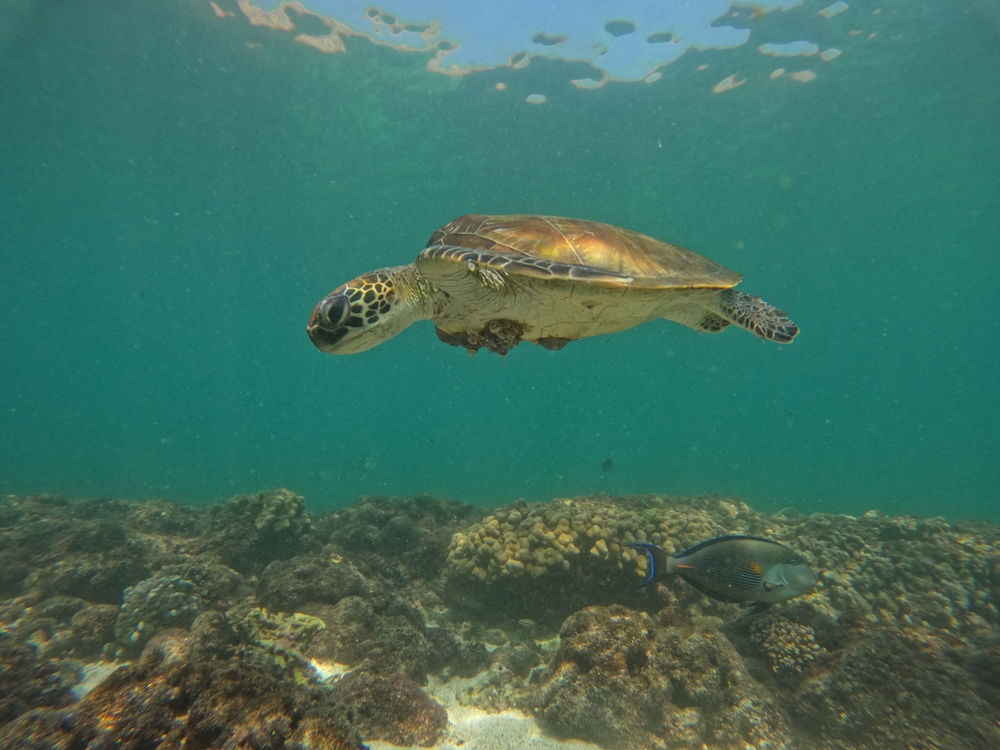
Snorkeling with turtles in Oman can be an unforgettable wildlife experience, especially when you see a turtle calmly swimming in its natural marine environment. But there is a responsibility when dealing with wild animal encounters, and that is that the object is to see them without altering their natural behavior.
The coastal waters and protected marine areas of Oman are important habitats for sea turtles. If you are thinking about booking a snorkeling trip, a few simple guidelines can help protect turtles, reefs of coral and the wider marine environment.
Keep Your Distance from Sea Turtles
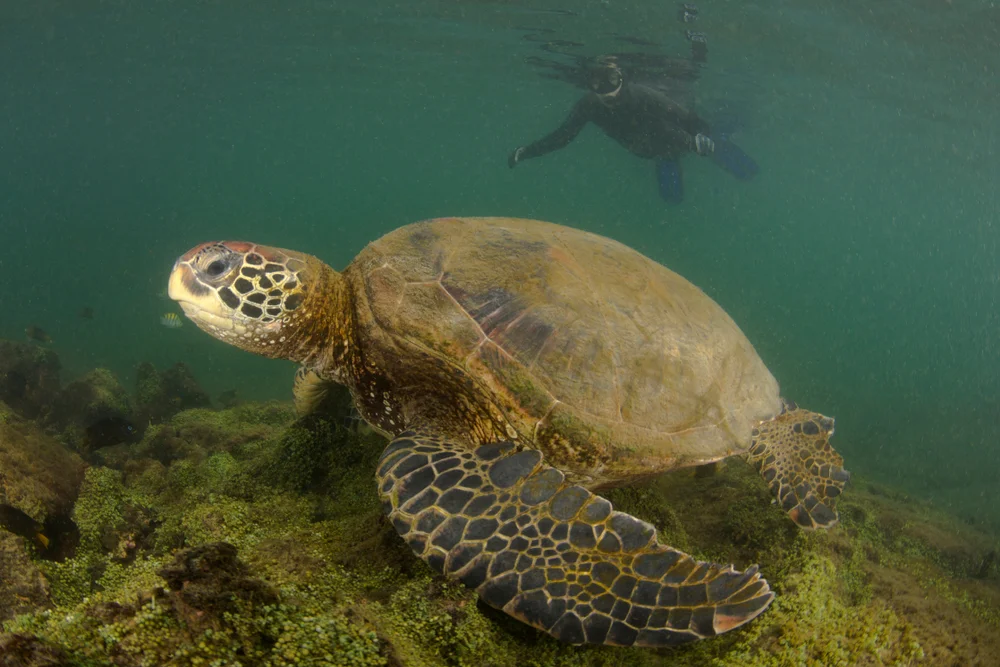
One of the most important rules when snorkeling with turtles is to give them space.
If you see a turtle near you it can be tempting to swim closer, especially if you want a photograph. However, chasing, surrounding or blocking a turtle can cause unnecessary stress.
Instead:
- Let the turtle decide where it wants to go.
- Avoid swimming directly behind it for long periods.
- Never attempt to touch or hold a turtle.
- Give the animal space to surface and breathe.
- Move slowly when a turtle is nearby.
The best wildlife encounters happen when the animal can continue its normal behavior without interference.
Never Touch Coral
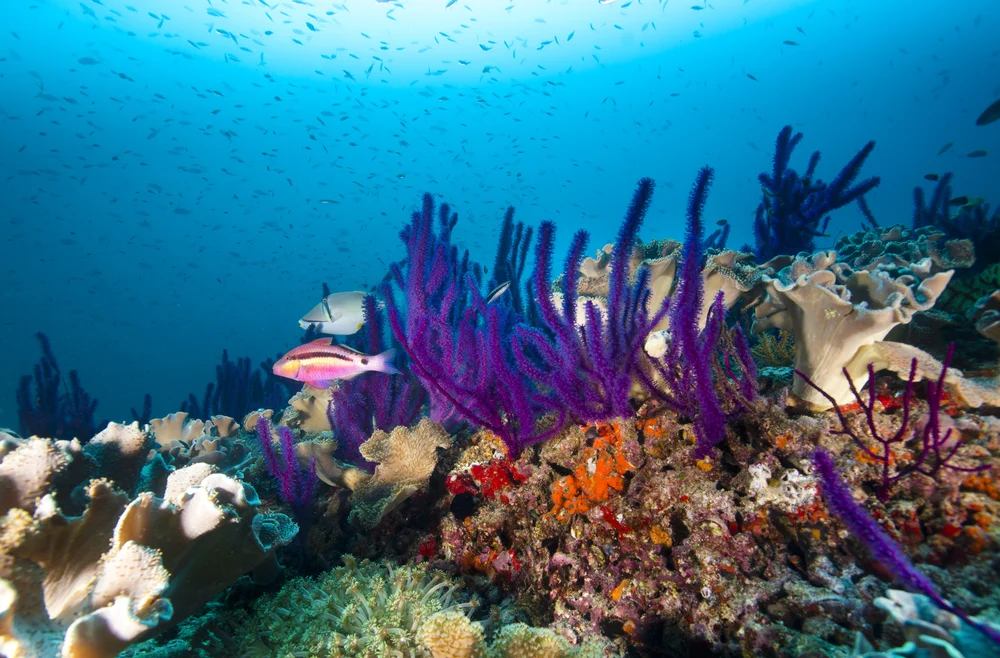
Turtle snorkeling is usually done in and around reefs of coral and other sensitive marine environments.
Even strong-looking coral can be easily damaged. Coral standing, kicking with fins or touching formations can cause irreversible damage.
While snorkeling:
- Keep your fins away from the reef.
- Avoid standing on the seabed.
- Do not touch or break coral.
- Maintain good buoyancy and body control.
- Give marine life plenty of space.
Protecting the reef also helps preserve the habitat that supports turtles and many other marine species.
Don’t Feed Marine Animals
Feeding turtles or fish may seem harmless, but it can interfere with natural feeding behavior.
Wild animals should find their own food rather than becoming dependent on visitors. Food can also encourage animals to approach people or boats more closely than they normally would.
The simple rule is: observe wildlife without feeding it.
Avoid Collecting Shells and Marine Life
Pretty shells, bits of coral, or interesting rocks may seem like innocent souvenirs, but leaving natural objects where you find them is part of responsible tourism.
Marine environments rely on many interconnected organisms and natural materials. Taking things out of the water or off the shore can have a slow effect on the ecosystem.
Take photographs instead of souvenirs.
Choose a Responsible Tour Operator
The operator you choose can have a major influence on your wildlife experience.
Before booking a turtle snorkeling trip, look for an operator that:
- Provides a safety and wildlife briefing
- Explains how to behave around turtles
- Does not encourage touching or chasing animals
- Respects protected-area regulations
- Provides appropriate snorkeling equipment
- Prioritizes passenger and wildlife safety
A good guide should help you enjoy the encounter without turning the animals into an attraction that must perform for visitors.
Be Careful When Taking Photos
Underwater photography can be a great way to remember your experience, but the welfare of the animal should always come before getting the perfect photograph.
Don’t swim fast at a turtle and don’t shuffle around to follow it.
Instead, just get comfortable and let the turtle pass naturally.
If the turtle changes direction due to you, back off and give it more space.
Follow Local Conservation Rules
Important marine and coastal habitats are protected in places like the Daymaniyat Islands Nature Reserve.
Depending on the season, the conservation requirements and the particular area you visit, the rules may change. Always follow the instructions of your tour operator and the local authorities.
Do not go into restricted areas, disturb wildlife or disregard instructions to approach an animal.
What If a Turtle Swims Toward You?
Sometimes a turtle may approach a swimmer naturally.
If this happens, stay calm and don’t try to touch it. Keep your movements slow and let the turtle decide where it wants to go.
You do not need to swim away immediately unless your guide instructs you to. Simply give the animal enough space to move freely.
A natural encounter is much more meaningful than one created by chasing or touching wildlife.
Why Responsible Turtle Snorkeling Matters
Sea turtles are a vital part of Oman’s marine ecosystem, and protecting them requires more than just conservation programs. Visitors are part of the equation, too.
Every swimmer who stays away from turtles, protects coral, doesn’t feed wildlife, and follows local rules is helping to create a healthier marine environment.
Responsible snorkeling also helps to ensure that future visitors will be able to see these animals in the same natural setting.
Final Thoughts
Snorkeling with turtles in Oman is an opportunity to observe wildlife in its natural environment, not an invitation to interact with it.
Keep your distance, protect the coral, never feed or touch marine animals, avoid collecting natural objects, and follow your guide’s instructions.
The most responsible encounter is often the simplest one: stay calm, watch from a respectful distance, and let the turtle continue on its way.

