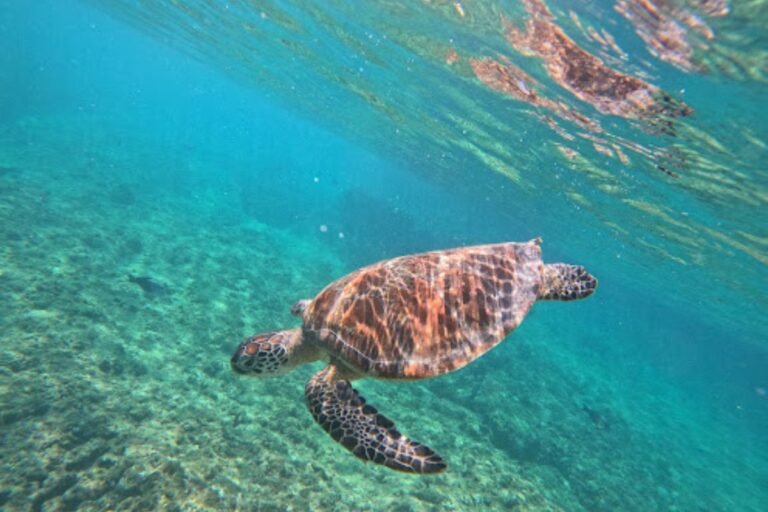
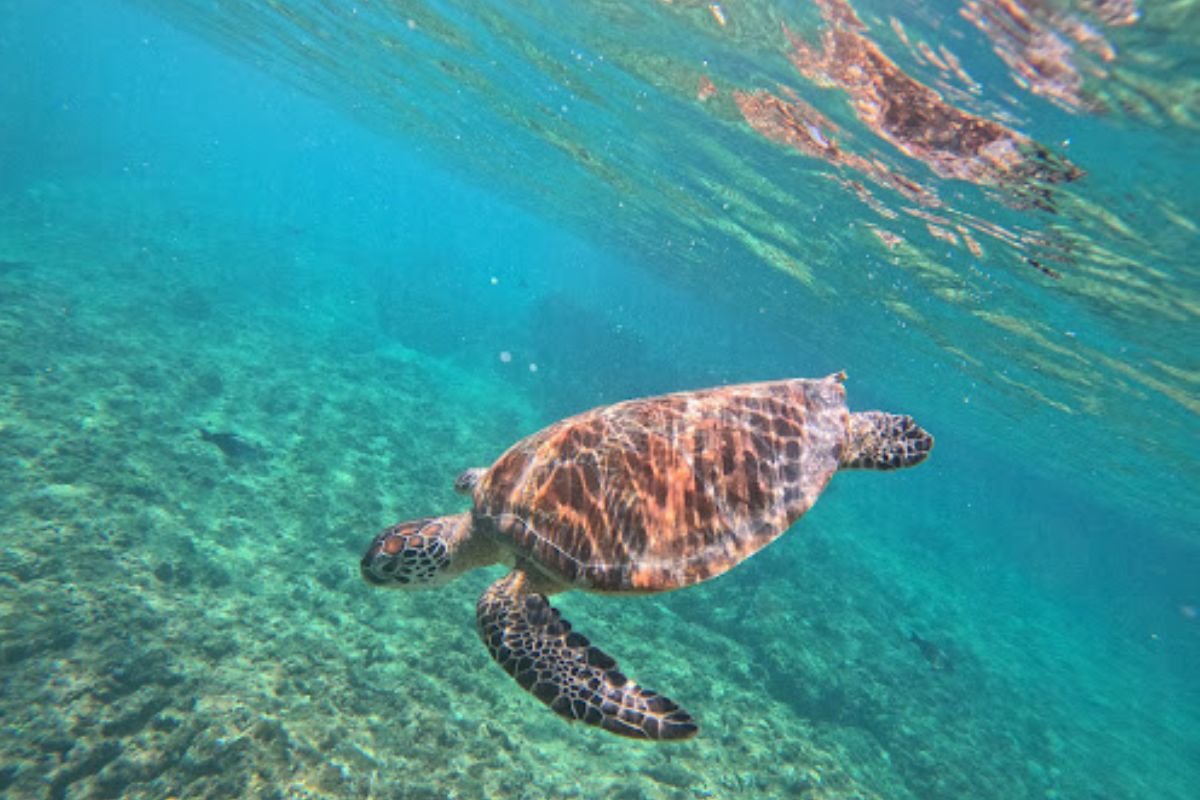
Seeing a sea turtle is the moment most guests remember from a shared Daymaniyat snorkeling tour. But which turtle did you see? Green and hawksbill turtles can look alike at first glance. This guide shows you how to tell them apart in a few seconds.
Why the Daymaniyat Islands are a turtle hotspot
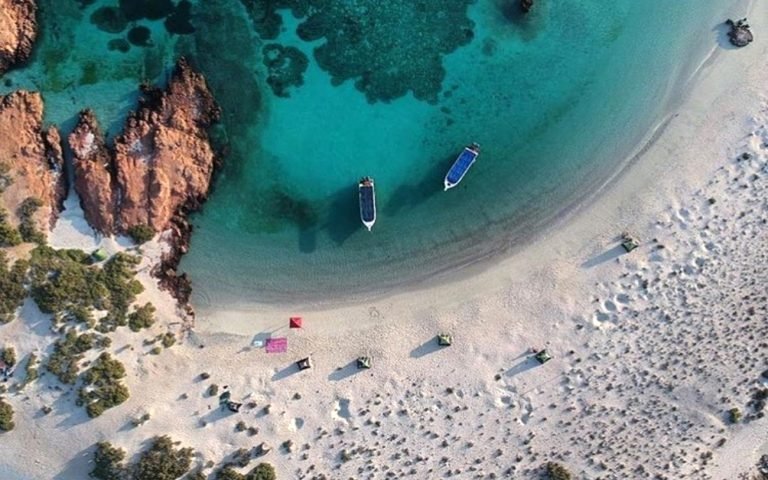
The Daymaniyat Islands have been a protected nature reserve since 1996, partly to protect turtle nesting beaches. Around 250 to 300 turtles nest on the islands each year, according to the Oman Observer. Beaches are closed to visitors from May to October during the nesting season.
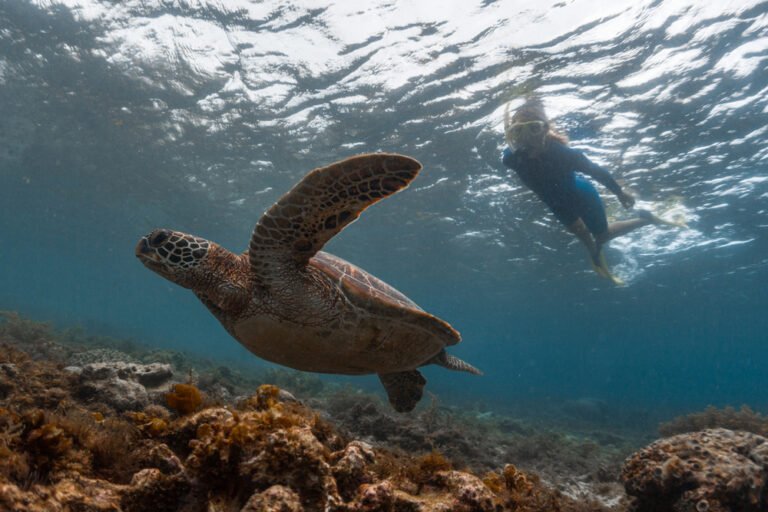
The four clues
Turtle experts use a few simple features. The NOAA hawksbill identification poster highlights these differences:
| Feature | Green turtle | Hawksbill turtle |
|---|---|---|
| Head shape | Rounded, short snout | Narrow, long head |
| Beak | Blunt, like a rounded mouth | Pointed and hooked, like a hawk’s bill |
| Scales between the eyes | 2 (one pair) | 4 (two pairs) |
| Shell edge | Smooth | Serrated, saw-like at the back |
Clue 1: Look at the head
This is the quickest check. A green turtle has a small, rounded head that looks almost too small for its body. A hawksbill’s head is narrower and longer, and it comes to a point.
Clue 2: Check the beak
The hawksbill gets its name from its beak. It is sharp and slightly hooked, which helps it reach into gaps in the reef to feed on sponges. A green turtle’s mouth is blunter and rounder, suited to grazing on seagrass and algae.
Clue 3: Count the scales between the eyes
If a turtle is calm and you have a clear view, look at the scales on top of the head between the eyes. These are called prefrontal scales. Green turtles have two, and hawksbills have four. It is the most reliable clue, but you need a good look or a clear photo.
Clue 4: Look at the back of the shell
Hawksbills often have a jagged, saw-like edge at the back of the shell, and the plates on top can overlap like roof tiles. Green turtles have a smooth shell edge.
Do not rely on colour
A turtle’s colour changes with age, diet and the light underwater. A green turtle is not always green, and hawksbills vary from amber to dark brown. Use shape, not colour.
Use your photos
The best way to identify a turtle is after the trip, using a clear photo of the side of its head. GoPro rental or filming is available on our tours for 20 OMR, so you can keep the moment and check the details later.
How to watch turtles responsibly
- Stay at least a few metres away.
- Never touch, chase or block a turtle’s path to the surface.
- Let the turtle choose how close it comes.
- Keep fins slow and still near the reef.
Our eco-friendly guide to snorkeling with turtles covers this in more detail, and where and how to see turtles in Oman explains the best spots.
See them for yourself
For a quieter encounter, a private Daymaniyat snorkeling tour lets your group stay longer when a turtle appears. Divers can also meet turtles on the shared scuba diving trip. Sightings are common but never guaranteed.
Your quick ID checklist
Next time a turtle swims past, run through these five questions in order:
- Is the head small and rounded, or long and narrow?
- Is the beak blunt, or pointed like a bird’s bill?
- Can you see two scales between the eyes, or four?
- Is the back edge of the shell smooth, or jagged?
- Did you get a side-on photo to check later?
If most answers point the same way, you have your species. If not, your photo and your guide can help settle it back on the boat.
Related reading
- Daymaniyat Islands Visitors Nearly Doubled Since 2023: What 2027 Could Look Like
- Browse all our shared tours in Muscat
Frequently asked questions
Which turtles nest on the Daymaniyat Islands?
Reports differ. The Oman Observer names hawksbill turtles, while other sources name different species. Green and hawksbill turtles are the ones most often seen by snorkelers.
Are hawksbill turtles endangered?
Yes. Hawksbills are critically endangered worldwide, which is why the reserve’s protection matters.
What do green turtles eat?
Adult green turtles graze mainly on seagrass and algae.
Can I touch a turtle if it swims close?
No. Touching stresses turtles and can spread disease. Enjoy it from a distance.
Sources: Oman Observer, turtle nesting · NOAA, hawksbill identification poster