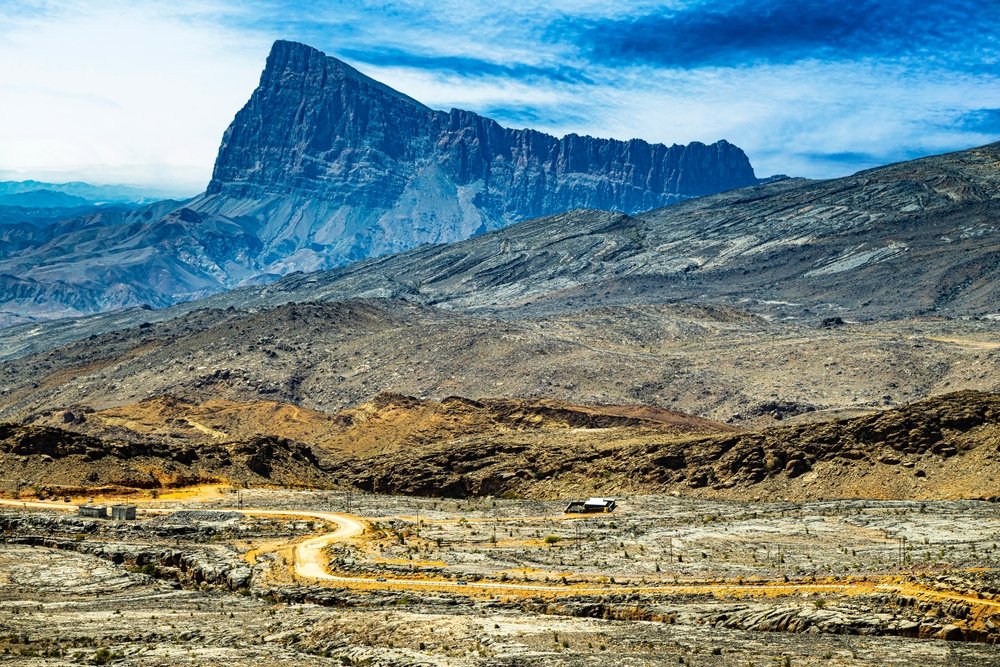
From December to February, Oman’s high mountains are far colder than most visitors expect. Jebel Shams can drop below freezing overnight; it hit –4°C on 26 January 2026. The Saiq Plateau on Jebel Akhdar recorded 6.2°C on the same day. Middays in the sun are much milder, but you’ll still want layers, a warm top and proper shoes, even if Muscat feels like summer when you leave.
This guide gives recent temperature readings, explains what that means on a day trip from Muscat, and lists what to pack.
Recent winter lows on the mountains
These are minimum temperatures reported by Oman’s Civil Aviation Authority weather stations and published in the local press.
| Date | Jebel Shams | Saiq (Jebel Akhdar) | Nizwa | Source |
|---|---|---|---|---|
| 26 Jan 2026 | –4°C | 6.2°C | — | Times of Oman |
| 20 Jan 2026 | –0.1°C | 4.8°C | 11.5°C | Oman Observer |
| January 2025 (month’s low) | — | 1.5°C | — | Oman Observer |
Two things stand out. Jebel Shams is usually several degrees colder than Jebel Akhdar, because it is higher. And both are far colder than the towns at their foot: on 20 January 2026, Nizwa’s low was 11.5°C while Jebel Shams was below zero.
Sub-zero readings are not an everyday event. The Oman Observer describes them as relatively rare even on Jebel Shams. In a cold spell, though, they happen several times in one winter.
What this feels like on a day trip
The coldest point is just before sunrise. On a day trip from Muscat you won’t usually be on the mountain at dawn, so the big sub-zero numbers apply mostly to people camping or staying overnight.
What day-trippers notice instead:
- A big jump in temperature. You may leave Muscat in a T-shirt and step out at a viewpoint where the air is cold and the wind is strong.
- Wind on exposed edges. Canyon viewpoints and the Balcony Walk on Jebel Shams are open to the wind, which makes it feel colder than the thermometer says.
- Strong sun at altitude. On a clear day the sun still feels hot, so you’ll take layers off and put them back on.
- Weather that changes quickly. Cloud and rain can roll in fast in the mountains, especially after a front has passed over Oman.
What to wear: a simple layering list
Think in layers you can add and remove, not one heavy coat.
- Base layer: a breathable T-shirt or long-sleeved top.
- Warm mid layer: a fleece or light jumper.
- Outer layer: a windproof jacket. In December and January, a lightly padded jacket is worth it on Jebel Shams.
- Long trousers: comfortable hiking or travel trousers. These also cover your knees for village visits.
- Closed shoes with grip: trainers or light hiking shoes. Avoid sandals for any walking on Jebel Shams; the path is rocky and uneven.
- Small extras: a warm hat or headband, sunglasses, sunscreen and a reusable water bottle. Gloves are optional for a daytime visit, but useful if you feel the cold.
Dress modestly in villages. On both mountains you’ll pass through traditional villages. Covered shoulders and knees are respectful for everyone and fit well with winter layers anyway.
For children: pack one more layer than you think they’ll need, plus a hat. They lose heat faster at viewpoints.
Jebel Shams vs Jebel Akhdar: which needs warmer clothing?
Jebel Shams, in most cases. It is higher, the walking route is exposed, and readings there are regularly several degrees below Saiq on Jebel Akhdar. On our Jabal Shams tour you walk part of the Balcony Walk along the canyon edge, so a windproof layer is essential.
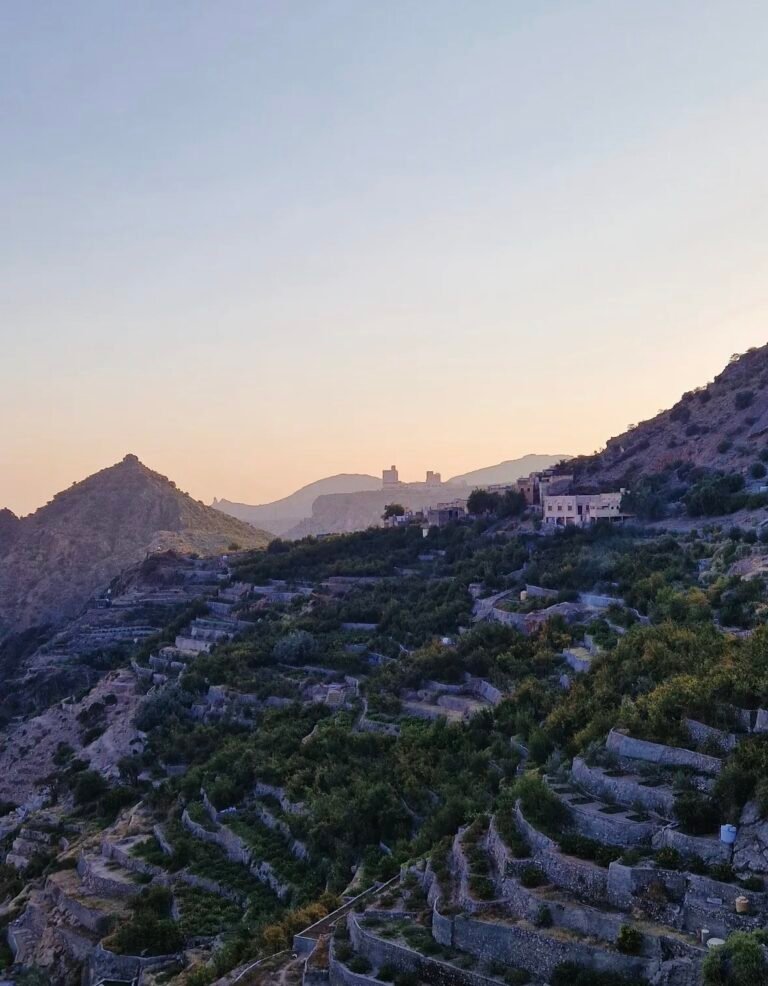
On the Nizwa & Jabal Akhdar tour, you start in Nizwa, which is mild, then climb to the plateau. A fleece and light jacket you can carry are usually enough for a daytime visit.
Not sure which mountain to choose? Read Jebel Shams or Jebel Akhdar: which mountain day trip from Muscat?
Month by month: what to expect
- November: Cool, clear days on the mountains and comfortable walking. A light jacket is usually enough.
- December to February: The coldest months. Expect cold mornings, possible frost on Jebel Shams and occasional rain. Full layering list.
- March: Warming, but mornings can still be chilly at altitude. A fleece is worth bringing.
- April to October: The mountains offer relief from the heat. Jebel Akhdar’s rose season usually falls in spring.
Frequently asked questions
Does it snow on Jebel Shams or Jebel Akhdar?
Rarely, but it can. In January 2022, snow covered parts of Jebel Akhdar after heavy rain, with temperatures as low as –3°C. It is unusual enough to make the news, so don’t plan a trip around it.
Is Jebel Shams too cold to visit in winter?
No. Winter is one of the best times to visit, because the air is clear and walking is comfortable in the middle of the day. You just need warm layers, particularly for the canyon edge.
What is the temperature on Jebel Akhdar in December?
It varies by year and by hour. The plateau around Saiq can drop to single digits overnight in December and January, and occasionally close to freezing. Daytime in the sun is milder.
Should I bring a winter coat to Oman?
Only if you are camping or staying overnight in the mountains. For day trips, a fleece plus a windproof jacket is usually enough. Muscat itself stays mild in winter.
Do tours run when the weather is bad?
Mountain weather can change quickly. Dress for changing conditions. Please note that bookings are non-refundable once paid, so check the forecast and your plans before you book. See our Cancellation & Refund Policy.
Planning a winter mountain day? Book the Jabal Shams Grand Canyon tour or the Nizwa & Jabal Akhdar tour, and message us on WhatsApp if you’d like advice on what to bring.
Sources: Times of Oman · Oman Observer · Oman Observer · The National